
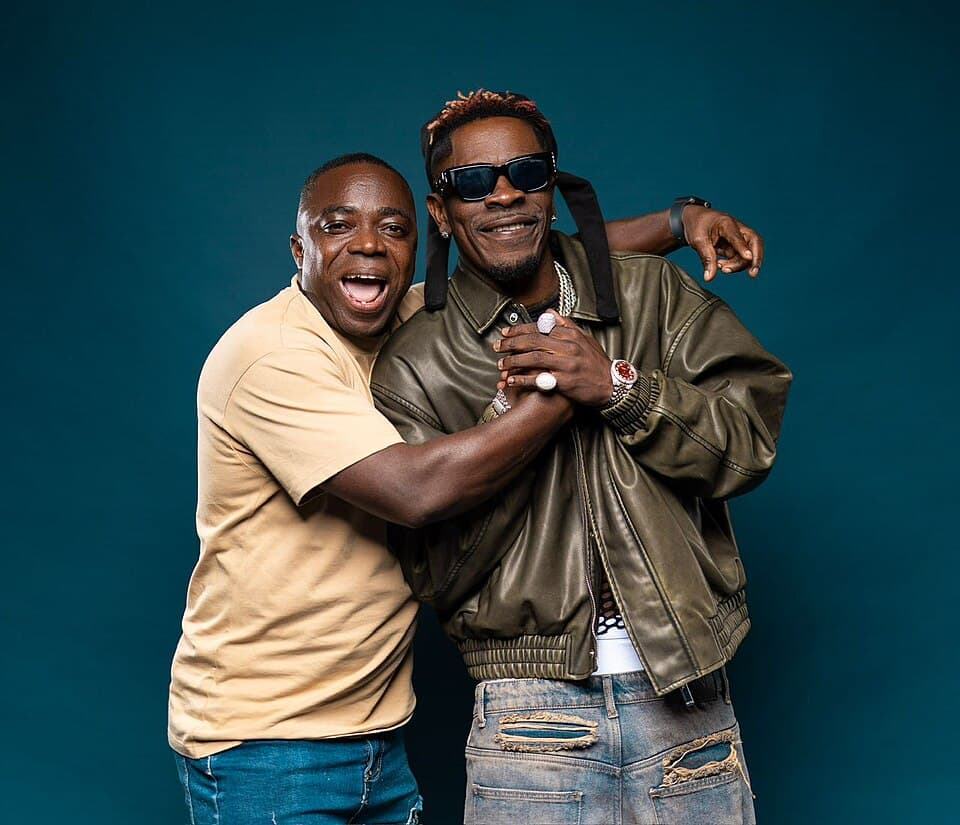
Dancehall King
Shatta Wale
From Bandana to Beyoncé — the loudest, proudest voice in Ghanaian music.
Born Charles Nii Armah Mensah Jr. in Accra in 1984, he first emerged in the early 2000s as Bandana, scoring with “Moko Hoo”. After years in the wilderness he returned in 2013 reborn as Shatta Wale — louder, brasher, untouchable — and “Dancehall King” (2014) made the new name permanent.
What followed was total dominance: “Melissa”, “My Level”, “Gringo”, endless street anthems and the fan army called the Shatta Movement, whose loyalty makes his concerts and social media presence unmatched in Ghanaian entertainment.
In 2019 the world came calling: Beyoncé featured him on “Already” from The Lion King: The Gift, performing it with him at major global events. Love him or argue with him, Shatta Wale bent Ghanaian pop culture around himself for a decade.
Key facts
- Born Charles Nii Armah Mensah Jr., 1984, Accra.
- First fame as Bandana (“Moko Hoo”); rebranded Shatta Wale in 2013.
- “Dancehall King” (2014) sealed the new reign.
- Featured by Beyoncé on “Already” (The Lion King: The Gift, 2019).
- Leads the Shatta Movement, Ghana’s biggest fan army.
Put the story in context: explore the History of Ghana to see the eras Shatta Wale helped shape.
Shatta Wale FAQs
What is Shatta Wale’s real name?
Charles Nii Armah Mensah Jr., born in Accra in 1984. He performed first as Bandana before the 2013 rebrand.
Did Shatta Wale record with Beyoncé?
Yes — “Already” from her 2019 album The Lion King: The Gift, which they later performed together at global events.
What is the Shatta Movement?
Shatta Wale’s famously loyal fanbase — arguably the most organised music fan army in Ghana.
More profiles
All people 1909 – 1972
Politics · Pan-Africanism
Kwame Nkrumah
Founder of modern Ghana
Ghana’s first president led the Gold Coast to independence in 1957, built the Akosombo Dam and Tema Harbour, and made Accra the capital of Pan-Africanism.
View profile c. 1840 – 1921
Royalty · Resistance
Yaa Asantewaa
Queen Mother of Ejisu
In 1900 Yaa Asantewaa led the War of the Golden Stool against Britain — the last great anti-colonial war in the region — and became an immortal symbol of courage.
View profile 1938 – 2018
Diplomacy · United Nations
Kofi Annan
Peacemaker of the world
The Kumasi-born diplomat who rose through UN ranks to become its 7th Secretary-General (1997–2006), winning the Nobel Peace Prize in 2001.
View profile